

 Summer is prime time for the ElliptiGO community. More daylight hours and warm temperatures are ideal for bike rides. But high temperatures and long rides also mean that hydration is a must.
Whether you’re out for an easy neighborhood cruise or chasing a personal best on a century, how well you hydrate can be the difference between a great ride and a miserable one. Here’s what to know about staying hydrated this summer, plus a few tools (including a homemade electrolyte drink) to help.
How Heat Impacts Your Body on Long Rides
When you ride in hot weather, your body relies on increased blood flow to your skin and sweating to keep your core temperature in check. Heat and humidity make it harder for that sweat to evaporate, so your built-in cooling system has to work overtime1. The result can be dehydration, muscle cramps, heat exhaustion or, in serious cases, heat stroke.
The numbers back this up. Losing even 2% of your body weight in fluid can impair both performance and cognitive function1. Endurance activities like cycling can cost you up to 3 quarts of fluid an hour2, which adds up fast on a long summer ride.
Know the Warning Signs
The signs of dehydration aren’t always obvious. You could be several miles into a ride before you notice something’s off. Here’s what to watch for, in yourself and your riding buddies:
- Dizziness or lightheadedness
- Headache
- Rapid heartbeat
- Nausea or confusion
- A noticeable drop-off in sweating
If any of these signs show up mid-ride, stop, hydrate and get to shade1.
One easy way to check your hydration level on rest days is to notice the color of your urine. Pale, straw yellow is a good sign; deep yellow or gold means it’s time to drink up2.
Your Hydration Game Plan
You don’t need a science degree to hydrate well. Just follow this hydration guide before, during and after your ride.
Before your ride: Drink 16 to 20 ounces of water about two to three hours before you head out2. This gives your body time to absorb the fluid instead of immediately sweating it out.
During your ride: Sip regularly rather than waiting until you’re thirsty. By the time you feel thirsty, you’re already behind on fluids. In hot conditions, drink roughly 8 ounces every 15 to 20 minutes3. If you’re out for more than an hour, especially in high heat, consider a sports drink or electrolyte mix to replace the sodium and potassium you’re losing through sweat2.
After your ride: Rehydrate with 16 to 24 ounces of fluid for every pound of body weight you lost during the ride. Weighing yourself before and after a long summer ride is the most accurate way to gauge how much you actually sweated out1.
Do You Really Need Electrolytes?
Chugging plain water without replacing electrolytes can dilute your body’s sodium levels.
Normally, eating regular meals and maintaining steady water intake are all it takes to keep your fluids and electrolytes in balance. But if you’re doing a long ride on a hot day without a meal break, adding an electrolyte powder to your water or drinking a sports drink can help maintain the balance your body needs.
You can even make your own sports beverage at home. Here’s a simple recipe for a homemade electrolyte drink:
- 1 liter (about 4 cups) cold water
- ½ cup orange or pineapple juice
- 2 tablespoons honey, maple syrup or sugar
- ½ teaspoon salt
Combine all ingredients in a pitcher or water bottle and mix well2. Sip and stay hydrated!
Just keep in mind that some powders and drinks have a lot of sugar, so plain water is a better choice for daily hydration3.
More Ways to Beat the Heat
- Time your ride: Early mornings and evenings mean cooler temperatures and less intense sun.
- Dress for the heat: Lightweight, light-colored, moisture-wicking gear helps your body cool itself more efficiently. The versatile ElliptiGO Buff provides UV protection and can help keep sweat out of your eyes, too. John P. says, “The thin design makes for a nice fit under my helmet and it keeps my head cool as well.”
- Cool down when you can: On a hot ride, a cold towel on the back of the neck or a splash of cool water on your head and neck at a rest stop feels great. Then change out of sweaty post-ride clothes and protect your car seat with a transition towel and seat wrap.
- Ease into summer heat: Don’t set out on your longest ride ever on the hottest day of the year. If you’re not yet acclimated to riding in warm weather, build up your mileage and your heat tolerance gradually over at least a week or two1.
Never Leave the Driveway Without Water
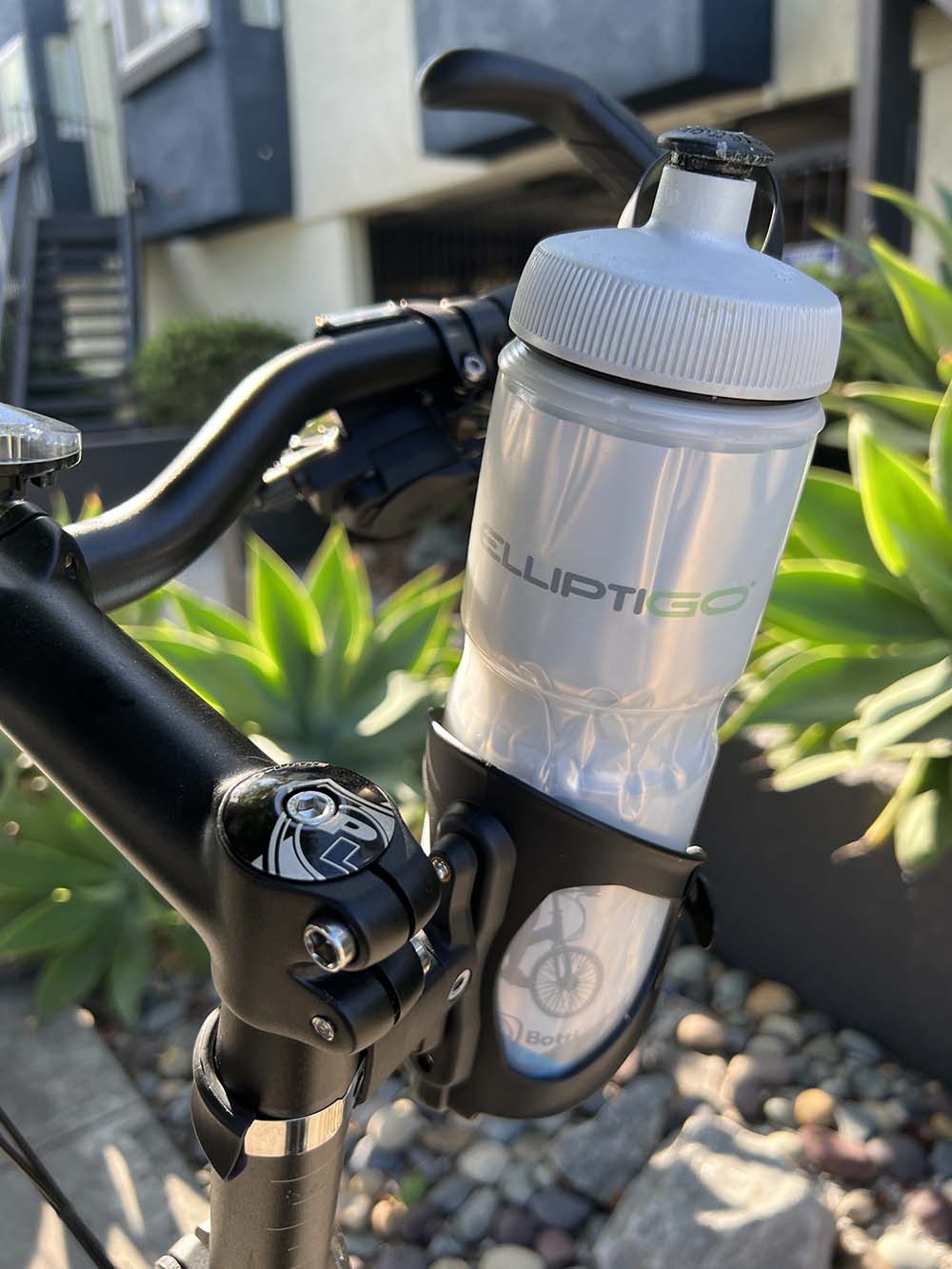
The best hydration plan in the world doesn’t help if you don’t have water within reach. That’s where ElliptiGO’s water bottle cage mount kit comes in. It attaches easily to your ElliptiGO bike so you always have a bottle close at hand, whether you’re out for a quick morning spin or a long GERC group ride.
Owners agree it’s a worthwhile add-on. In his review, Craig A. calls it “extremely good quality” with “easy instructions,” and says he’d “recommend [it] to anyone looking to add a way to stay hydrated.” Bonnie G. is a fan of the cage’s flexibility. In her review, she notes: “You can put all size water bottles in there, and the adjustment allows you to loosen or tighten the opening for a snug fit around the bottle.”
It’s a small addition that makes it that much easier to stick to the sip-early, sip-often habit that will keep you feeling strong from the first mile to the last, no matter what the weather is like.
Enjoy the Ride — Hydrated
Summer riding season is one of the best times to be an ElliptiGO owner. It’s the best time to enjoy sunshine, community and miles that feel more like fun than a workout. A little planning around hydration means you get to experience all of it without the heat getting the better of you.
So fill up that bottle, mount it on your ElliptiGO bike, and get out there. Your body will thank you.
Sources:
1 Bastyr University Department of Exercise Science, “Beat the Heat: How to Exercise Safely and Stay Hydrated in Hot Weather,” July 29, 2025.
2 Gabrielle Judd, R.D., quoted in “Sports and Hydration for Athletes: Q&A with a Dietitian,” Johns Hopkins Medicine, updated April 20, 2026.
3Centers for Disease Control and Prevention, National Institute for Occupational Safety and Health, “Hydration” fact sheet, DHHS (NIOSH) Publication No. 2017-126.